DriveVision

DriveVision

Mixed Reality Driving School

Mixed Reality Driving School

Problem Statement

New drivers often struggle to transition from driving school environments to real-world driving, leading to increased accidents and decreased confidence on the road.

New drivers often struggle to transition from driving school environments to real-world driving, leading to increased accidents and decreased confidence on the road.

Overview

This project uses Augmented Reality (AR) and Virtual Reality (VR) technologies to transform how new drivers transition from driving school to real-world driving.

Our solution aims to reduce accidents and increase driver confidence through immersive training methods.

This project uses Augmented Reality (AR) and Virtual Reality (VR) technologies to transform how new drivers transition from driving school to real-world driving.

Our solution aims to reduce accidents and increase driver confidence through immersive training methods.

Objective

Goal

Improve real-world driving skills and confidence of new drivers.

Training to Individual

Utilising adaptive algorithms that adjust the difficulty and types of scenarios presented based on the driver’s performance and progress.

Approach

Utilize advanced training methods and driving simulations to offer real-time, contextual learning experiences that mirror real-world challenges.

Reduce Anxiety

By providing real-time feedback and corrective suggestions during training sessions, allowing learners to practice and perfect their skills without real-world consequences.

Methodology

Data Collection

Data Collection

Conducted surveys and interviews with new drivers, driving instructors, Driving School and other authorities.

Conducted surveys and interviews with new drivers, driving instructors, Driving School and other authorities.

Market analysis

Market analysis

Performed a comparative analysis of driving simulators and AR-based training systems worldwide, identifying crucial features and performance standards.

Performed a comparative analysis of driving simulators and AR-based training systems worldwide, identifying crucial features and performance standards.

Literature Review

Literature Review

Reviewed research papers on cognitive load, augmented reality (AR) systems, AR Devices, Training and Technological Advancements.

Reviewed research papers on cognitive load, augmented reality (AR) systems, AR Devices, Training and Technological Advancements.

Literature Review

Augmented Reality in Vocational Training: A Systematic Review of Its Application in Various Industries.

This paper reviews the use of AR in vocational training across different industries over a 20-year period, providing insights into its effectiveness and applications.

Analyzing Augmented Reality (AR) and Virtual Reality (VR) Recent Developments and Directions.

This research summarises developments in AR and VR for education, including how these technologies are being used for learning purposes.

Systematic Review of Augmented Reality Training Systems.

This paper reviews augmented reality training systems, categorising them based on training methods and evaluating their validity.

Measuring the Effectiveness of Virtual Training: A Systematic Review"

This paper systematically reviews methods used to measure the effectiveness of virtual training, including augmented reality in educational contexts.

The Application of Augmented Reality in the Automotive Industry: A Systematic Review

The Application of Augmented Reality in the Automotive Industry: A Systematic Review

This study presents a systematic review of AR systems in the automotive industry, synthesizing research on how AR is used in various automotive applications.

User Process

(While enrolling in driving school)

Research

Evaluate

Select

Register

Submit Documents

Practical Session

Theory Sessions

Practical Exam

Certification

Licensing Guidance

Users Involved

Driving School Involved

Interviews

To ensure our AR system meets the needs of its users, extensive field research was conducted with driving schools, their instructors, and students. This approach helped us gather a understanding of the current training environment and its challenges.

Interviews

Driving school owners

Objective : Understand the operational and educational frameworks of driving schools.


Discussions focused on their teaching methodologies, the content taught, and the administrative challenges they face.

Interviews

Driving school instructors

Objective : Capture detailed insights into the teaching process and student interactions.


In-depth interviews to learn about what instructors teach, their pedagogical approaches, and their observations on common student difficulties and behaviours.

Interviews

Students

Objective : Gather first-hand accounts of learners' experiences and needs.


Conducted individual interviews with four students (2 male, 2 female) to explore their views on existing training approaches and their anticipations.

Persona

Interview 2
Age - 23

Gender - Female

Interview 2
Age - 23

Gender - Female

Interview 4

Age - 19
Gender - Female

Interview 4

Age - 19
Gender - Female

Interview 1

Age - 20
Gender - Male

Interview 1

Age - 20
Gender - Male

Interview 3

Age - 19

Gender - Male

Interview 3

Age - 19

Gender - Male

Insights

Data Collection

Data Collection

Age Group: 18-24 

Total People: 15


Location:

Uttarakhand: 11

Uttar Pradesh: 3

Himachal Pradesh: 1


Gender:

Male: 7 

Female: 8


Educational Background: Engineering and Technology: 2

Commerce and Business: 2

Arts and Humanities: 4

Science: 2

Other Specialised Areas: 2 Information Technology: 1

Finance: 1

Art History: 1 

Age Group: 18-24 

Total People: 15


Location:

Uttarakhand: 11

Uttar Pradesh: 3

Himachal Pradesh: 1


Gender:

Male: 7 

Female: 8


Educational Background: Engineering and Technology: 2

Commerce and Business: 2

Arts and Humanities: 4

Science: 2

Other Specialised Areas: 2 Information Technology: 1

Finance: 1

Art History: 1 

Data Collection

Data Collection

Age Group : 25-30

Total People: 10


Location:

Uttarakhand: 8;

Uttar Pradesh: 2


Gender:

Male: 6

Female: 4


Educational Background: Engineering and Technology: 4 Commerce and Business: 3

Arts and Humanities: 3

Science: 1;

Other Specialized Areas: 2

Age Group : 25-30

Total People: 10


Location:

Uttarakhand: 8;

Uttar Pradesh: 2


Gender:

Male: 6

Female: 4


Educational Background: Engineering and Technology: 4 Commerce and Business: 3

Arts and Humanities: 3

Science: 1;

Other Specialized Areas: 2

Target Audience

Focused on individuals aged 18-24, as they constituted the majority of participants during data collection.

Video Recording

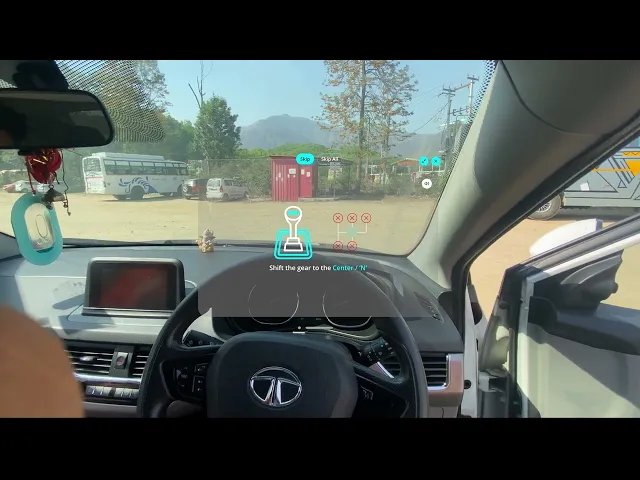
As part of the research method, immersive experiences were generated by filming videos from the viewpoint of a driver using an Oculus headset. A webcam mounted on glasses worn by the me provided a driver's-eye view of the surroundings. This method enabled a thorough examination of visibility, spatial awareness, and other elements affecting driving capabilities.

Stakeholders Involved

Tertiary Stakeholders


Car Insurance Companies

Vehicle Manufacturers

Tertiary Stakeholders


Car Insurance Companies

Vehicle Manufacturers

Secondary Stakeholders


Driving Schools

Parents of New Drivers

Secondary Stakeholders


Driving Schools

Parents of New Drivers

Technology Providers


AR/VR Hardware and Software Developers

Technology Providers


AR/VR Hardware and Software Developers

Regulatory Bodies


Transport Authorities

Educational Regulators

Regulatory Bodies


Transport Authorities

Educational Regulators

Primary Stakeholders


New Drivers

Driving Instructors

Primary Stakeholders


New Drivers

Driving Instructors

Proposed

The system will utilise a head-mounted display (HMD) or AR glasses to overlay driving scenarios directly onto the real-world view. This interface will display real-time information, such as navigation cues, hazard warnings, and vehicle status, enhancing the learner's situational awareness and decision-making skills.

The system will utilise a head-mounted display (HMD) or AR glasses to overlay driving scenarios directly onto the real-world view. This interface will display real-time information, such as navigation cues, hazard warnings, and vehicle status, enhancing the learner's situational awareness and decision-making skills.

Real- time Feedback and Guidance

The AR system will provide immediate feedback on the driver’s actions, offering corrective suggestions and guidance to improve driving techniques. This feature aims to accelerate the learning curve and build confidence by allowing learners to practice and learn from mistakes in a controlled environment.

The AR system will provide immediate feedback on the driver’s actions, offering corrective suggestions and guidance to improve driving techniques. This feature aims to accelerate the learning curve and build confidence by allowing learners to practice and learn from mistakes in a controlled environment.

Integration with Vehicle Systems

The system will be designed to integrate seamlessly with a variety of vehicle systems, providing a holistic training tool that can be used across different car models and setups. This integration allows for a more realistic and practical training experience.

The system will be designed to integrate seamlessly with a variety of vehicle systems, providing a holistic training tool that can be used across different car models and setups. This integration allows for a more realistic and practical training experience.

Future Scope

Objective: The primary goal during the idea validation phase is to confirm the feasibility, usability, and effectiveness of the AR-based training system in real-world educational settings.

Objective: The primary goal during the idea validation phase is to confirm the feasibility, usability, and effectiveness of the AR-based training system in real-world educational settings.

Develop more in unity


The project is currently set up for a single vehicle in Unity, providing a basic simulation environment for beginner drivers. To enhance its functionality, further development is needed to support a wider range of vehicles, allowing the system to cater to diverse learner needs and offer more varied driving scenarios.

Develop more in unity


The project is currently set up for a single vehicle in Unity, providing a basic simulation environment for beginner drivers. To enhance its functionality, further development is needed to support a wider range of vehicles, allowing the system to cater to diverse learner needs and offer more varied driving scenarios.

User testing


The system has yet to undergo extensive user testing with multiple beginners, which is crucial for identifying usability issues and validating the effectiveness of the training modules. Incorporating feedback from a diverse group of learners will help refine the system and ensure it meets the needs of its intended audience.

User testing


The system has yet to undergo extensive user testing with multiple beginners, which is crucial for identifying usability issues and validating the effectiveness of the training modules. Incorporating feedback from a diverse group of learners will help refine the system and ensure it meets the needs of its intended audience.

Language Barrier


At present, the system is available in only one language, limiting its accessibility to a specific demographic. To broaden its reach, the project should incorporate multilingual support, enabling students from different linguistic backgrounds to benefit from the training.

Language Barrier


At present, the system is available in only one language, limiting its accessibility to a specific demographic. To broaden its reach, the project should incorporate multilingual support, enabling students from different linguistic backgrounds to benefit from the training.

Personalised Learning


Personalisation is key to the system’s effectiveness, as it allows for tailored training that addresses each student’s specific needs and weaknesses. Developing advanced personalised learning features will enhance the overall learning experience, leading to better skill acquisition and confidence building for students.

Personalised Learning


Personalisation is key to the system’s effectiveness, as it allows for tailored training that addresses each student’s specific needs and weaknesses. Developing advanced personalised learning features will enhance the overall learning experience, leading to better skill acquisition and confidence building for students.

Environment Explaination

Hovering Screen

Hovering Screen

The hovering screen functions as a flexible, movable interface within the driver's field of vision. It can be positioned conveniently by the driver anywhere in the visual space, allowing for customizable interactions based on personal comfort and situational needs.

The hovering screen functions as a flexible, movable interface within the driver's field of vision. It can be positioned conveniently by the driver anywhere in the visual space, allowing for customizable interactions based on personal comfort and situational needs.

Passthrough

Passthrough

Essential for maintaining awareness of the real environment, the pass-through screen lets drivers see through the digital overlays to the actual road and surroundings. This feature is critical for blending virtual scenarios with real-world contexts, ensuring practical learning and safety.

Essential for maintaining awareness of the real environment, the pass-through screen lets drivers see through the digital overlays to the actual road and surroundings. This feature is critical for blending virtual scenarios with real-world contexts, ensuring practical learning and safety.

Contextual Adaptations

Contextual Adaptations

The system dynamically adjusts the display content according to the driving situation, enhancing visibility of navigation aids and safety warnings during complex or adverse conditions. This ensures that MR elements are optimally configured for effective learning without distraction.

The system dynamically adjusts the display content according to the driving situation, enhancing visibility of navigation aids and safety warnings during complex or adverse conditions. This ensures that MR elements are optimally configured for effective learning without distraction.

FINAL DEsign

THANK YOU

If there’s any question please kindly to ask me. Let’s Discuss

waffledesigns12@gmail.com or +91 96991 82986

THANK YOU

If there’s any question please kindly to ask me. Let’s Discuss

waffledesigns12@gmail.com or +91 96991 82986

Create a free website with Framer, the website builder loved by startups, designers and agencies.